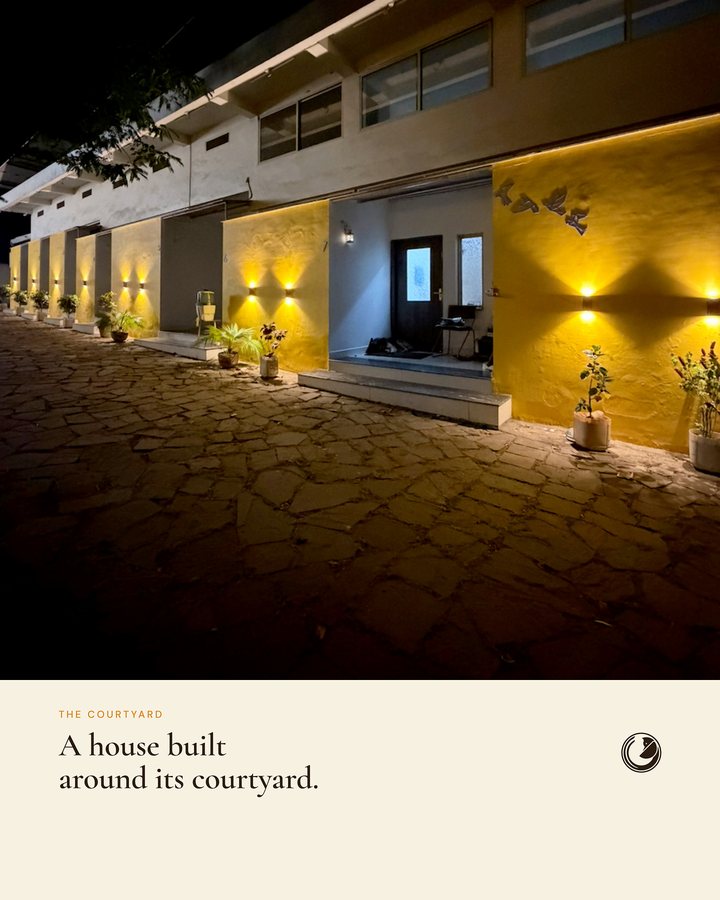
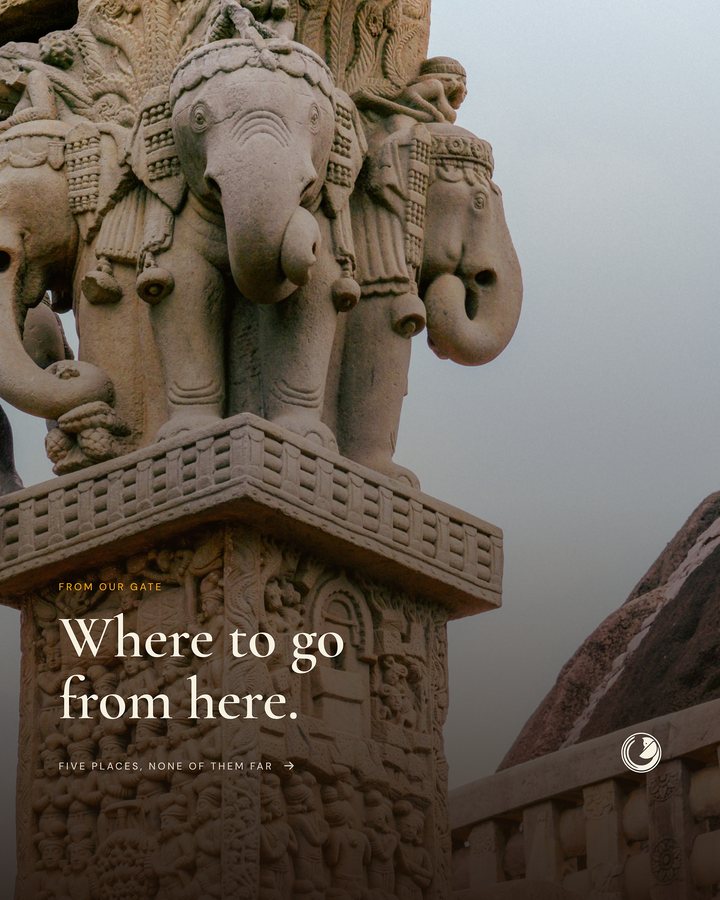
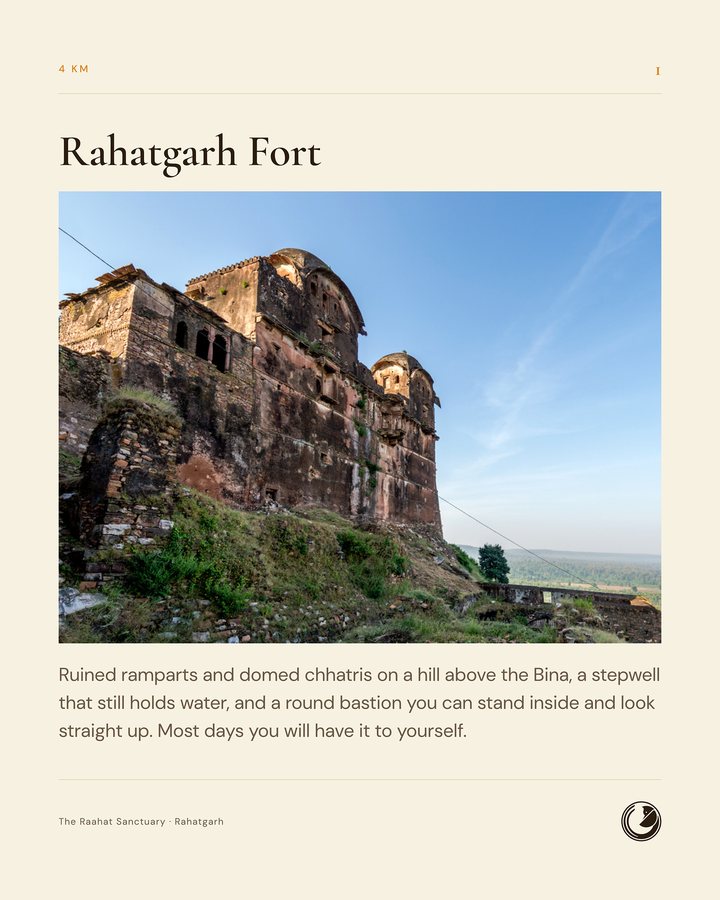
The Raahat Sanctuary is a family farm with rooms outside Rahatgarh, in the middle of Madhya Pradesh, and the home its owners grew up in. It needed four things: an identity of its own, a website that shows guests the place as it is and lets them book with the family, one screen to run the property from, and a way to be found. We designed the identity, built the website and the control centre, and took the first step of its marketing.
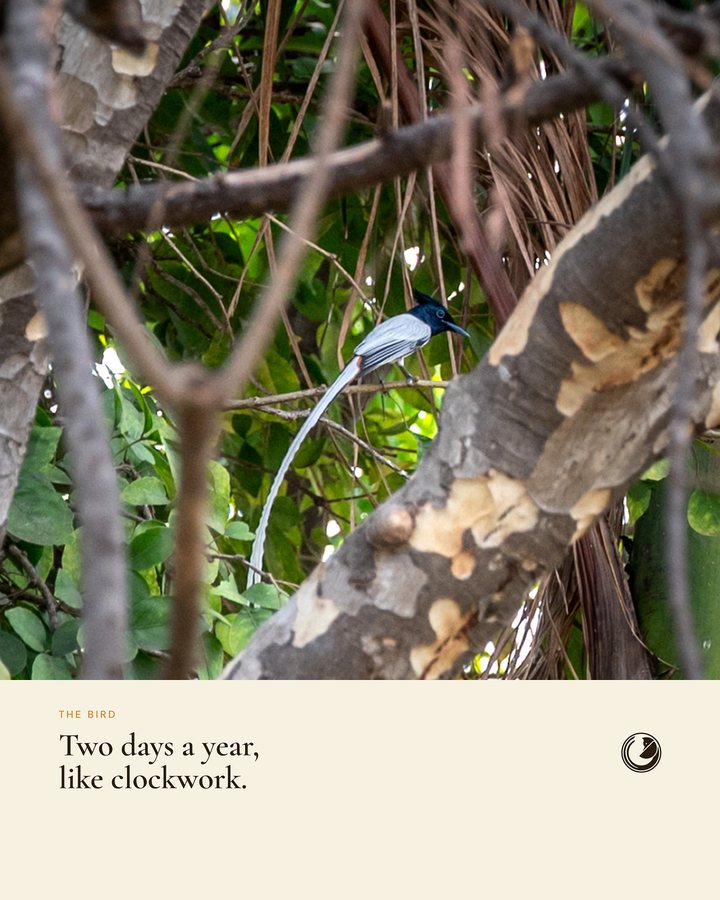
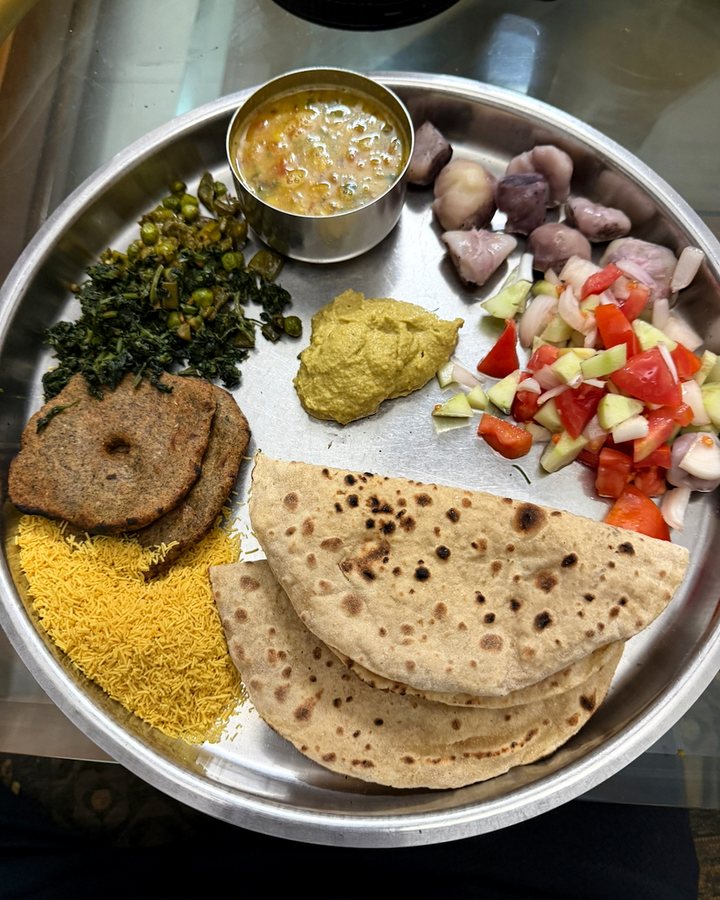
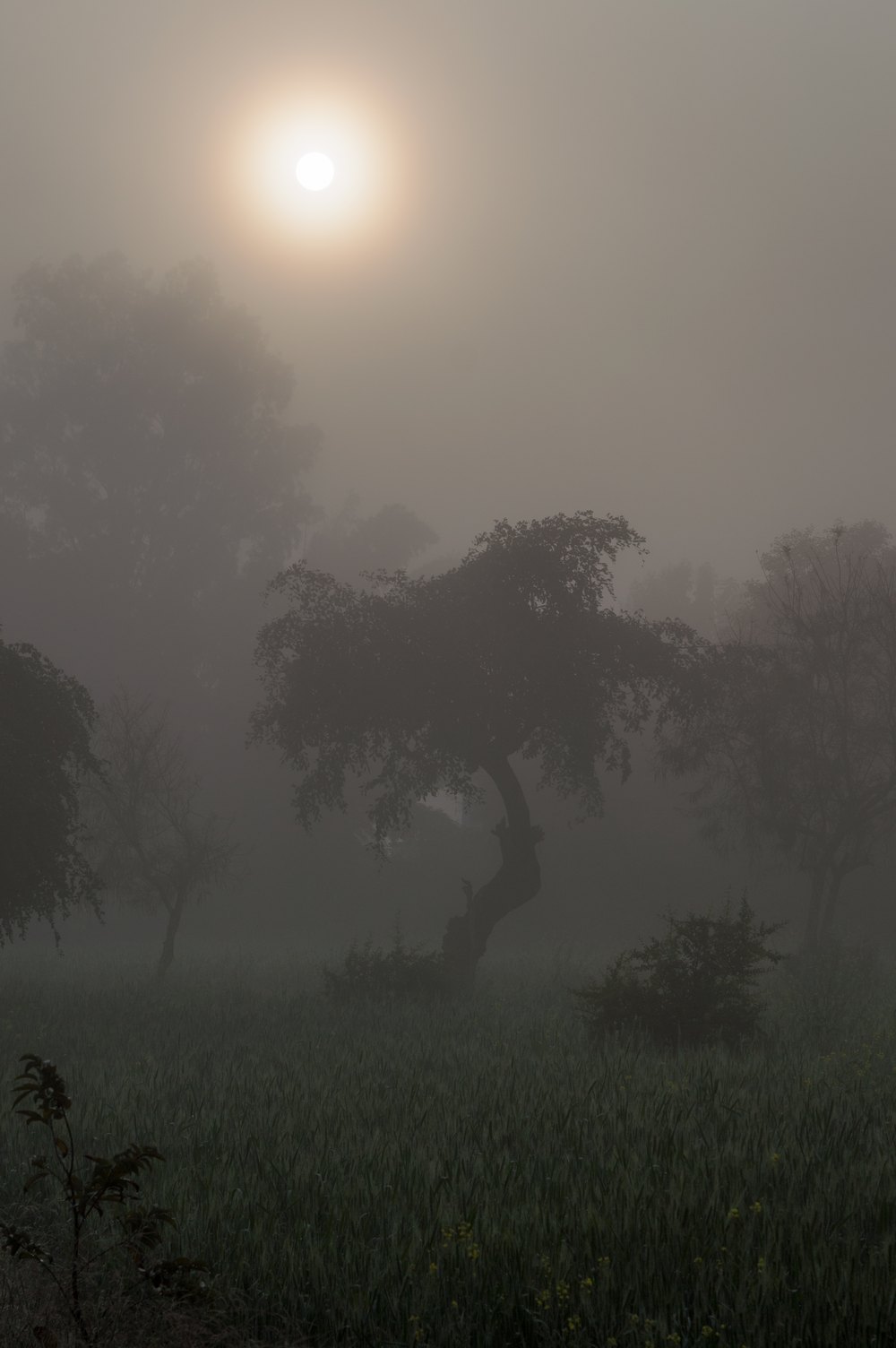
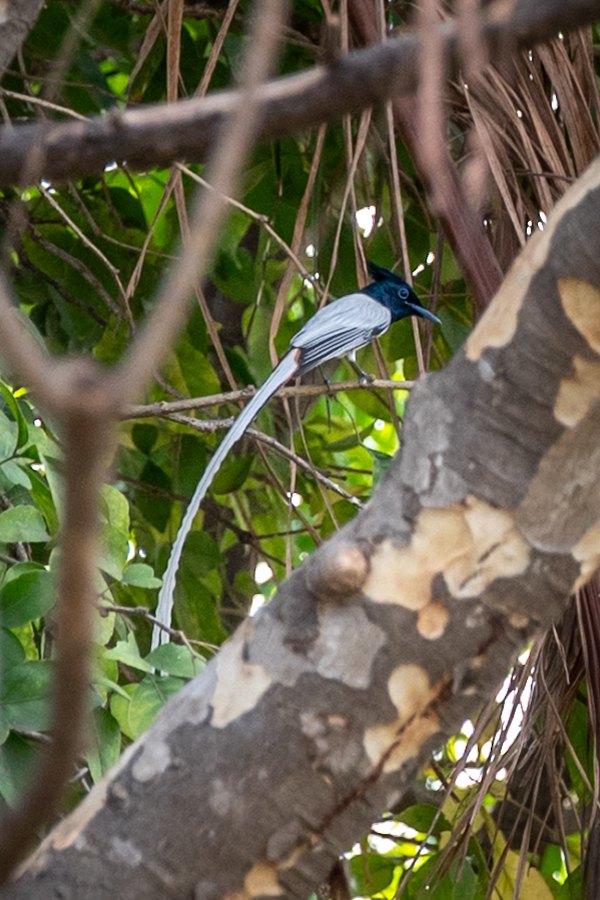
What makes it worth the drive is in the detail: winter fog over the wheat, lunch from the fields, and power that stays on round the clock from the farm's own solar. Then there are the birds. The owners have identified more than fifty species on the land, among them the paradise flycatcher the place is named for, which comes for two or three days a year.
They knew who it was for: people from abroad who want the real India, city families with roots in Madhya Pradesh, and remote workers who need a good connection. A booking platform would flatten all of that into a star rating and a price, and take a cut of every booking. Behind the scenes, nothing held the bookings, the rooms and the money in one place, and nothing yet carried the place to the people they had in mind. We answered in four parts.
The town already calls the place Farmstay, the word painted on the board at the gate. The name the family chose had to lead, with the local name kept close beside it.
The Raahat Sanctuary takes its name from the Indian paradise flycatcher, the state bird of Madhya Pradesh. As the family puts it on the site, “A sanctuary is a place it is safe to land.” The hope is that guests go home knowing that a place close by can still give them some raahat.
We drew the identity around that bird: a mark, a wordmark, a small palette and two typefaces. The same mark signs the website and every post, so a guest meets one place wherever they find it.

Paper is the everyday ground and cocoa the heavy one, with one mango, taken from the logo and tuned a shade for screens. The website and the posts are set in two typefaces, Cormorant Garamond for sentences and DM Sans for labels, with Mukta kept for Devanagari. The name in the wordmark has a serif of its own.
Come and do nothing, beautifully.
For a few days each year, our namesake flies in.
What's happening these days
Air-conditioned, with 24-hour hot water. Power from our own solar, around the clock.
The colours, the serif of the wordmark, and the two faces the website and the posts are set in.
Nothing online showed guests what the place is like in the month they would come, and there was no website where they could see it and book with the family directly.
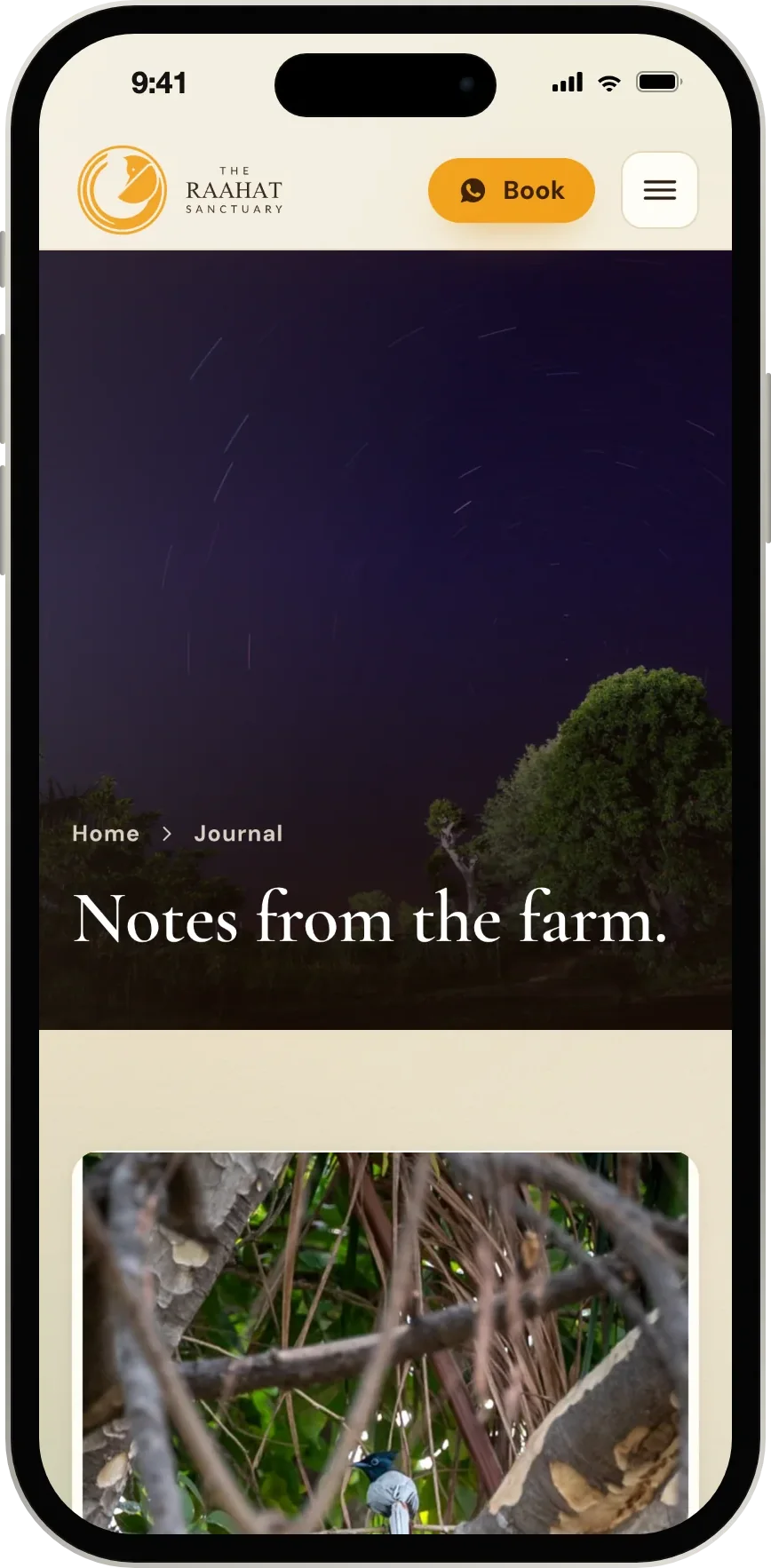
findraahat.com opens on the line the owners chose: “Come and do nothing, beautifully.” Every Book button opens WhatsApp with the message already written, so a guest is talking to the family from the first tap. No platform sits in the middle, and no one takes a commission on the booking.
The virtual tour is a 3D model of the estate, built from the plan the owners drew in Google Earth, their photographs and the renders of the guest wing they shared. The sun stands where it does over Rahatgarh at that hour, the crops follow the local calendar, the rain comes in its months, and Bruno, the German shepherd they call “our resident soldier”, does his rounds before settling by the fire.


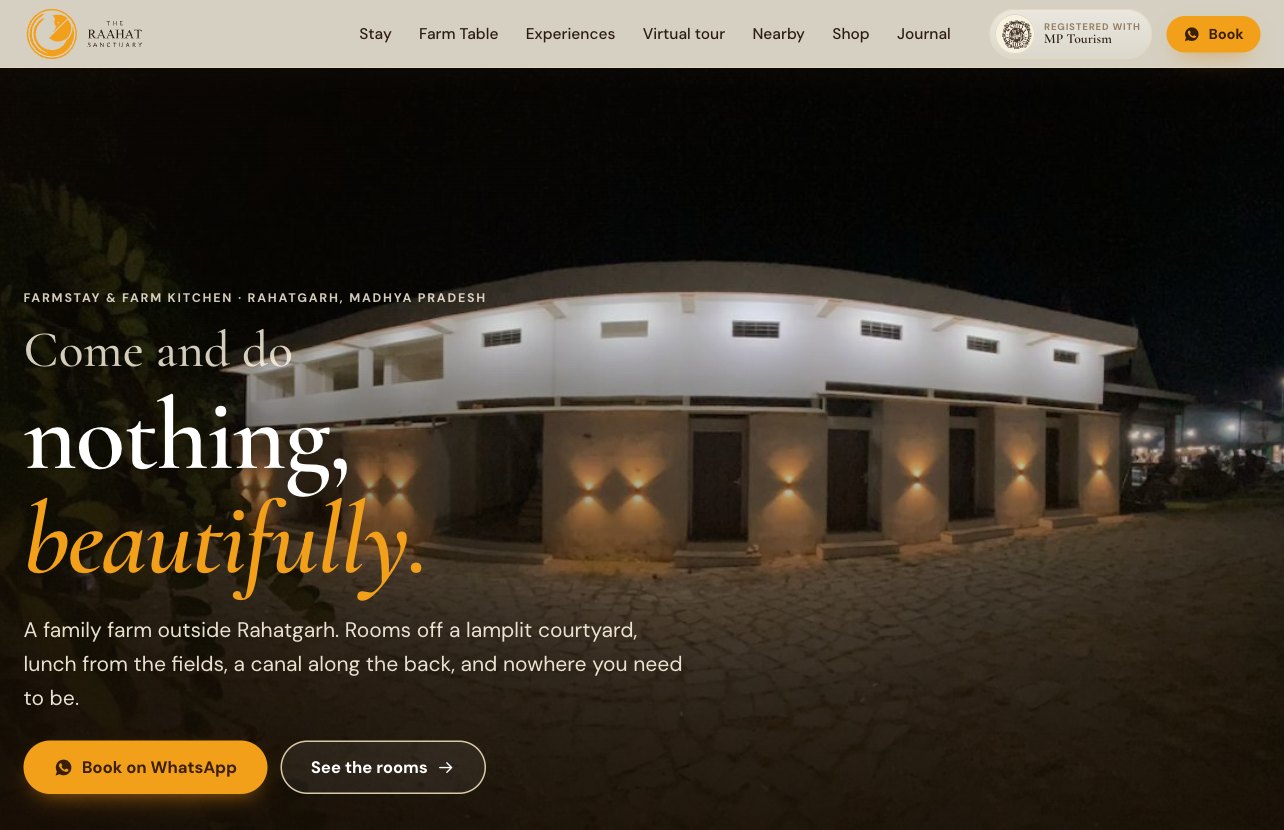
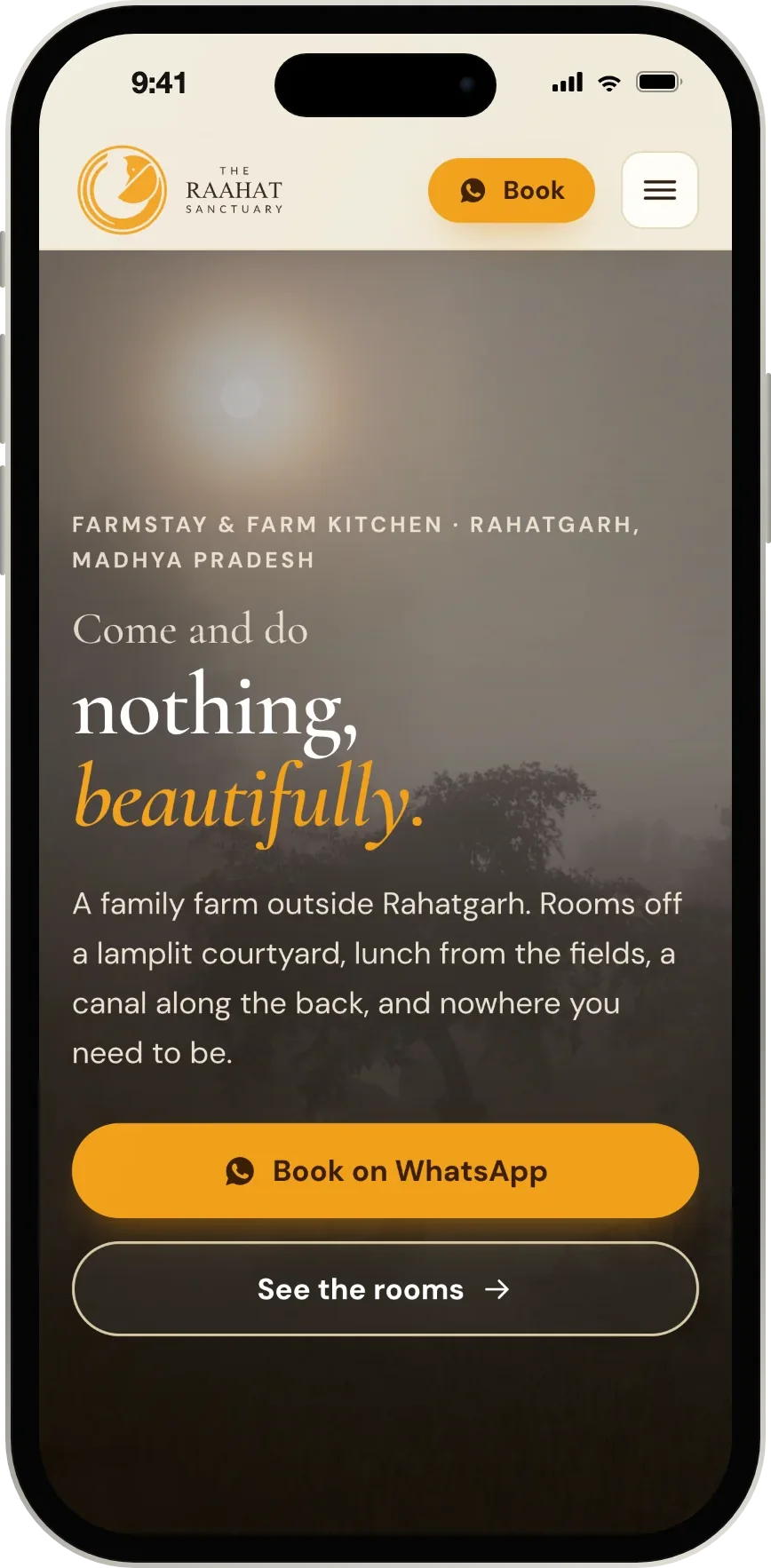
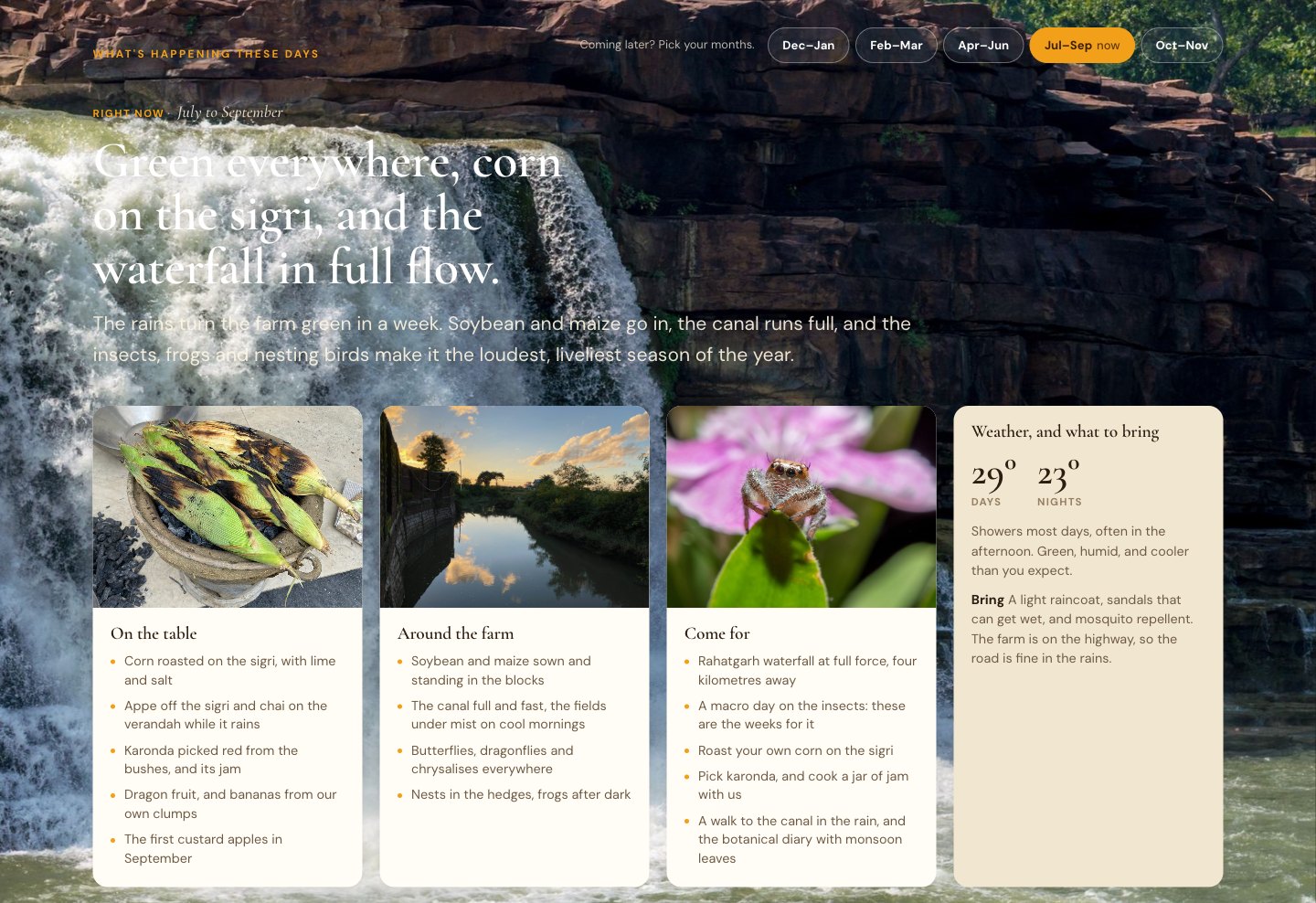
The home page on a desk and on a phone. Book on WhatsApp is the first button under the opening line.

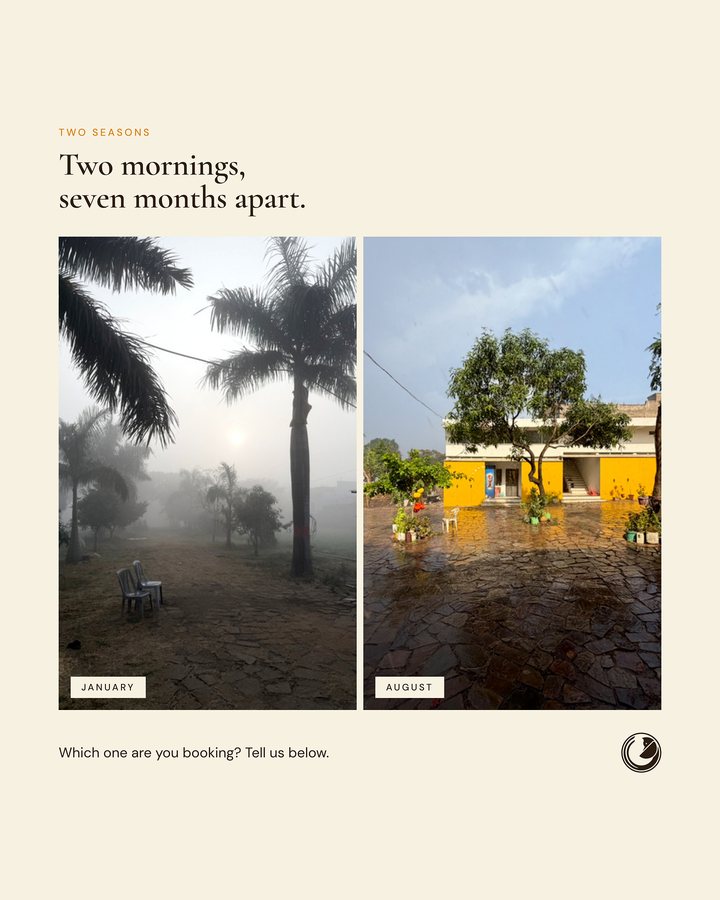
The estate map through a year, from April blossom to January fog, beside the home page's season block, which changes with the month on its own.


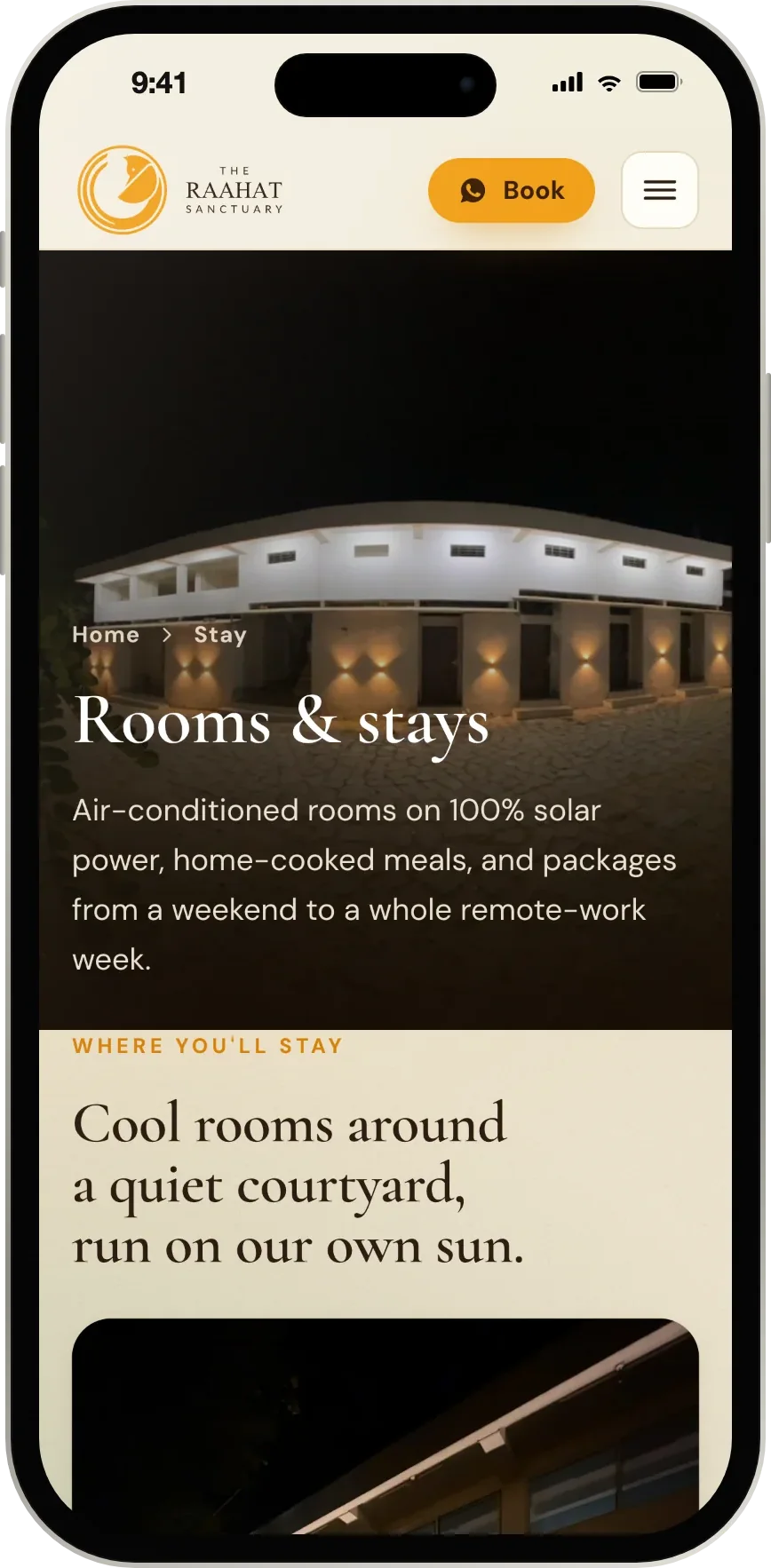
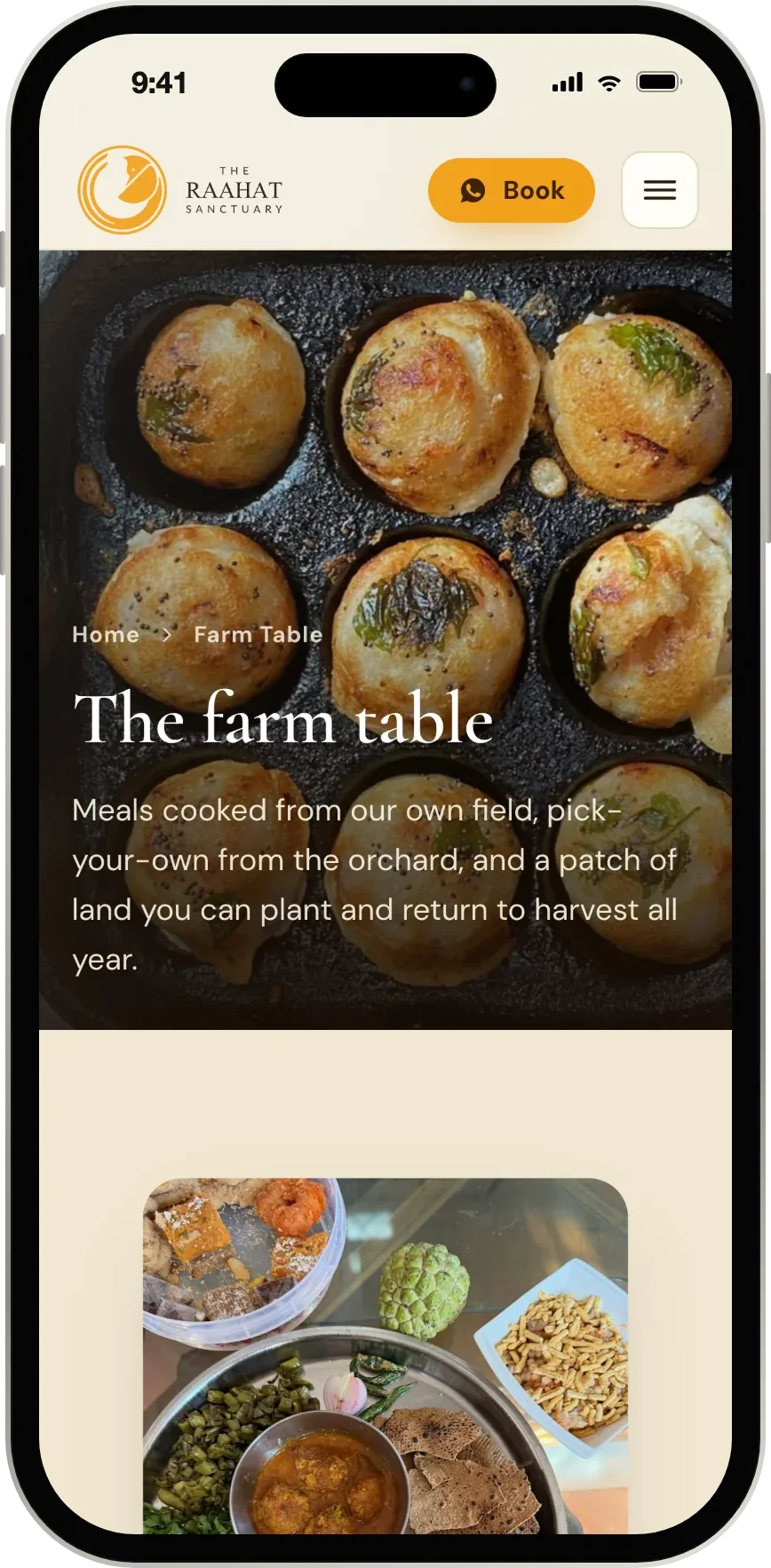
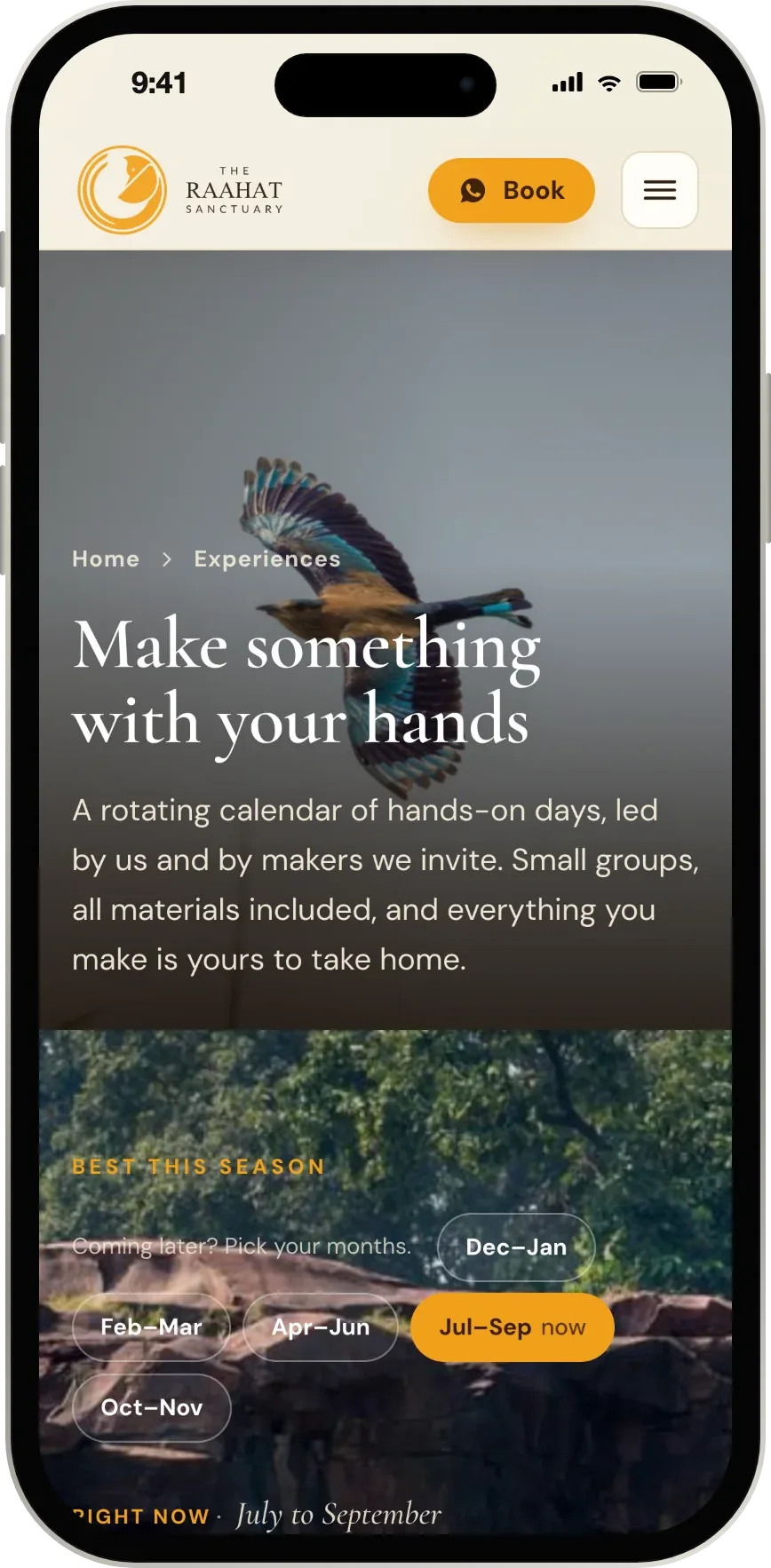
Four more pages on a phone: the rooms, the farm table, experiences and the journal.
What guests get
A tap on Book opens WhatsApp with a message ready to send. A guest can also call, or send an enquiry form that lands in WhatsApp too. The family reads and replies in person. As the site puts it: “Three messages, and the room is yours.”
Guests drag the hour or pick a month and watch the light, the crops and the weather change, so they see the estate as it will be when they come.
A “what's happening these days” block turns over with the season, five times a year: what is on the table, what is happening around the farm, what to come for, and the weather and what to bring.
First person and warm throughout, with a journal of nine posts and a privacy page in the same voice. The site sets no cookies, so no banner stands between a guest and the page.
The bookings, the rooms and the money, cash included, had no single home, so nothing could say at a glance which rooms were taken or what was owed.


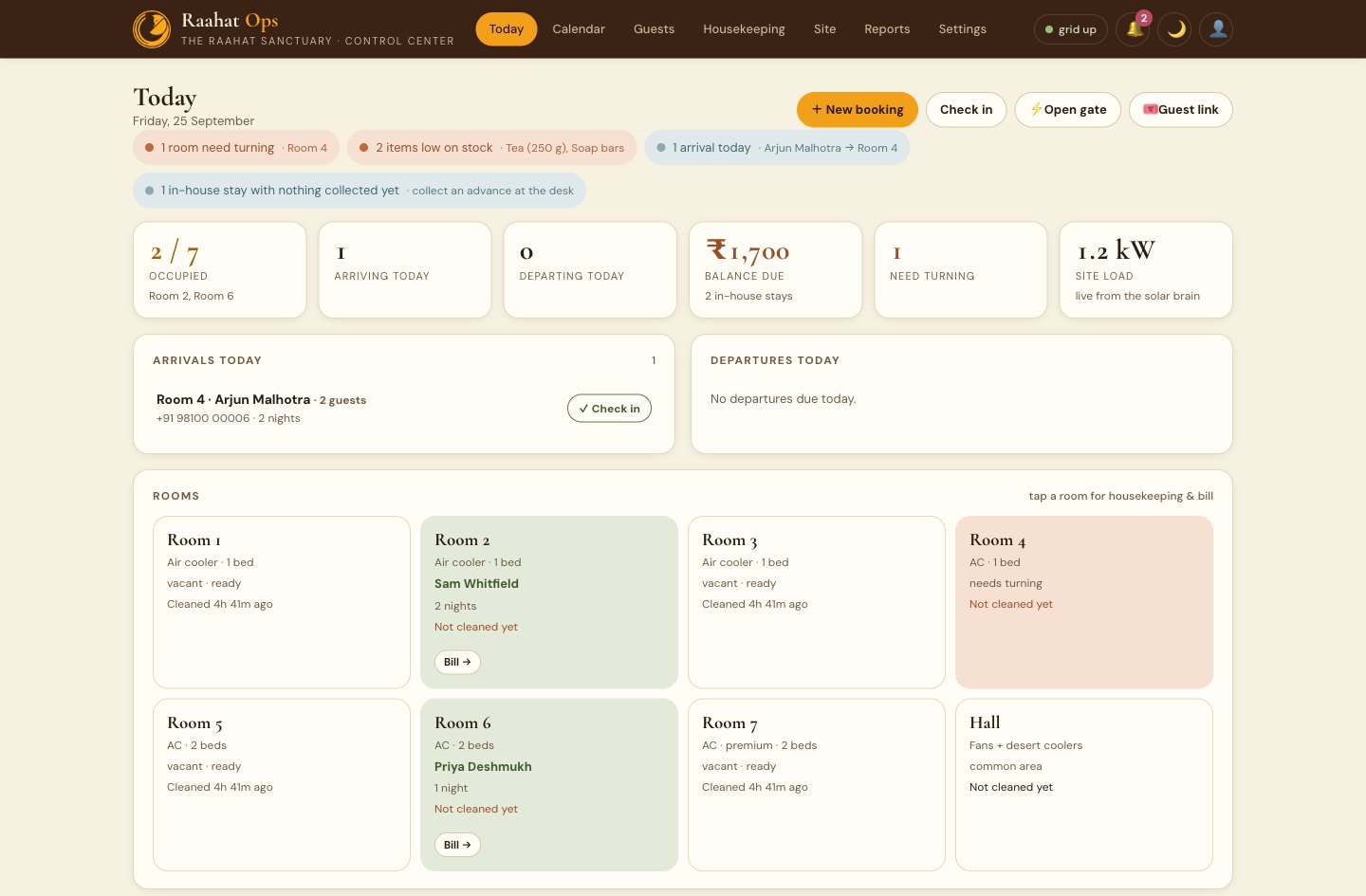
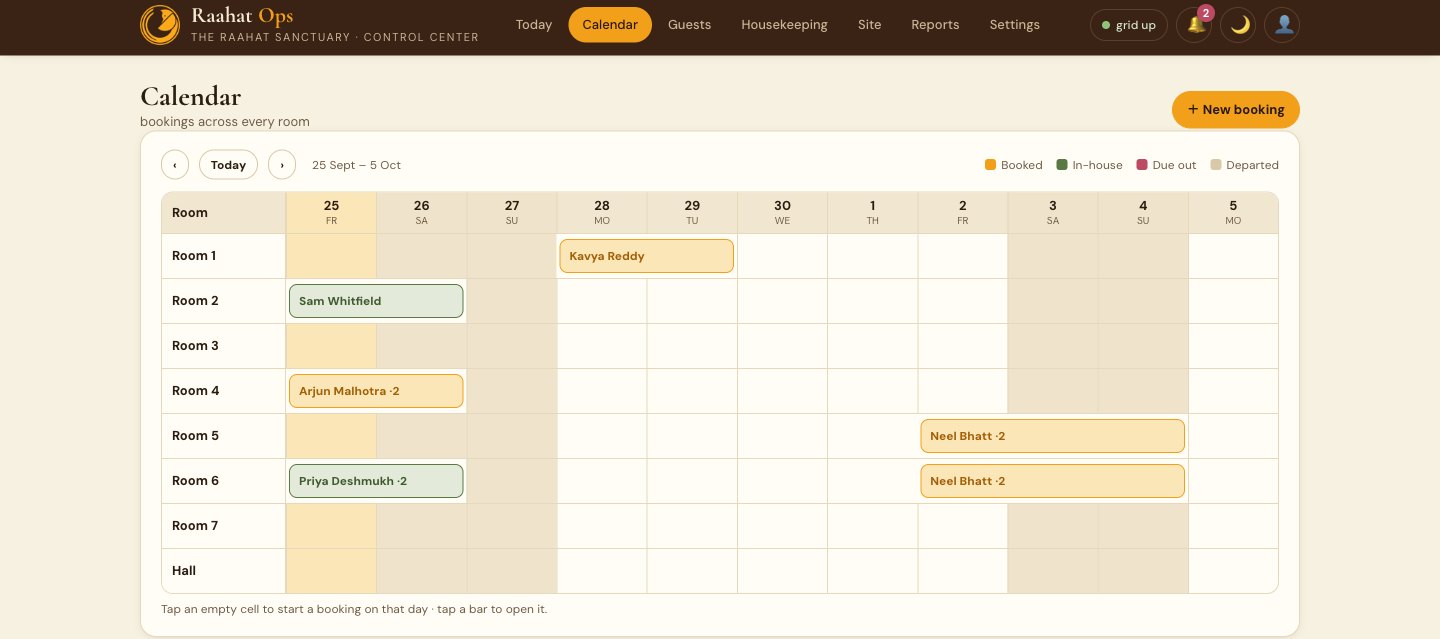
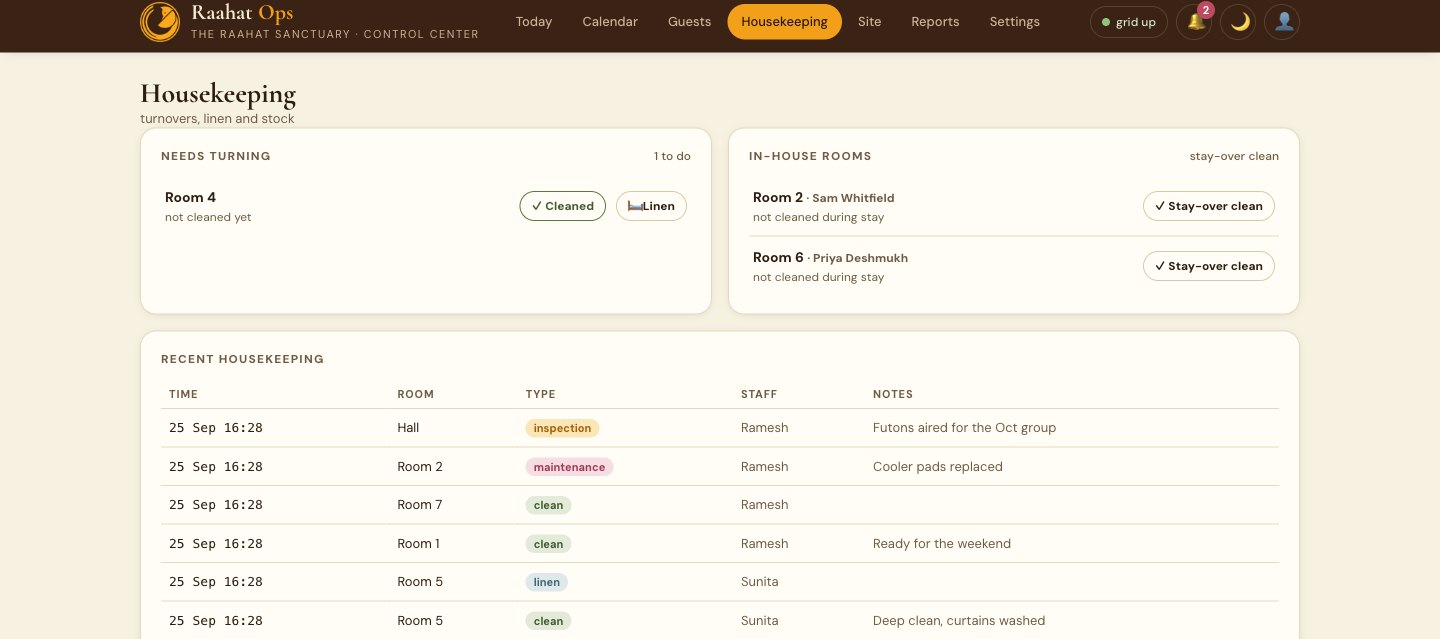
Seven sections, from the day's arrivals to the reports, hold the bookings, the rooms and the money beside the gate, the solar and the cameras. The owners wanted it to look like part of the new website, so it wears the same colours and type.
The control centre never closes. The bookings, the rooms, the gate and the day's alerts are there at any hour, with nothing to install.
Every visit passes two locks: a one-time code sent to an approved email, then a personal login. Every change is recorded.
On a laptop in another city or a phone out on the land, the family runs the property from wherever they are.


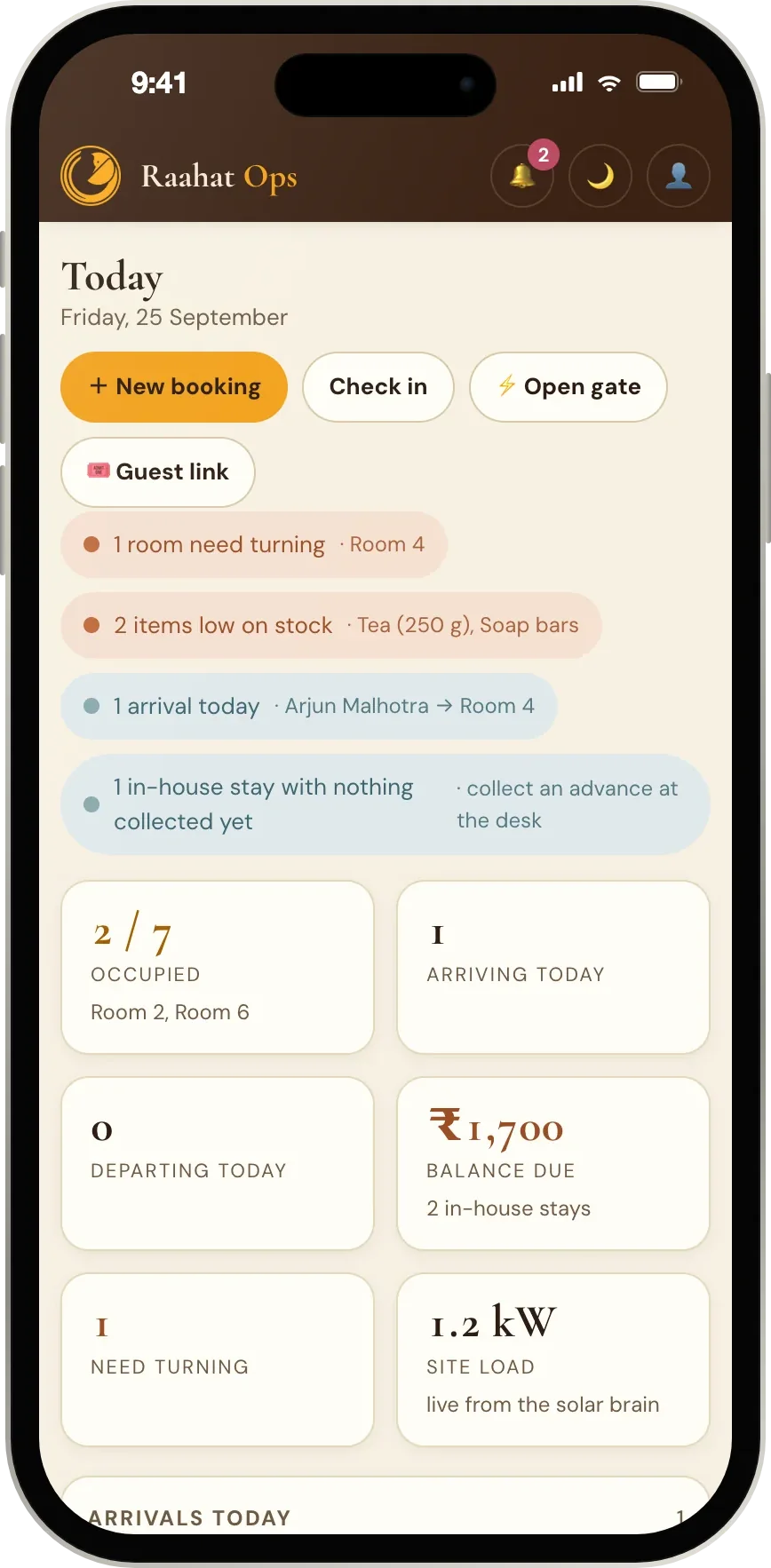
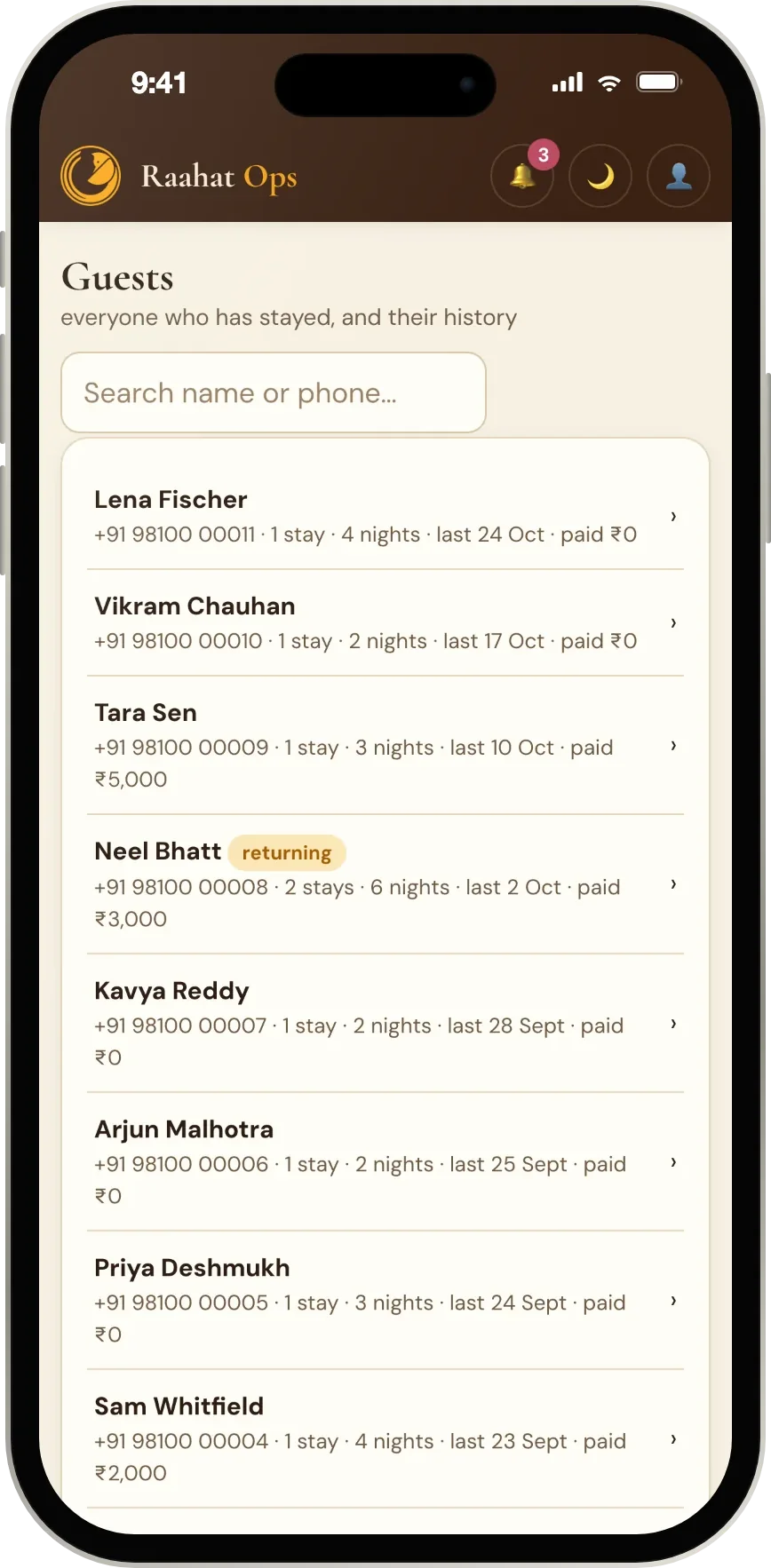
Today, the booking calendar and housekeeping. Screens shown with a demonstration database; the guests are fictional.
What the family can do now
Arrivals, departures, rooms to turn, balances due and the day's alerts, together.
The gate opens from the screen, or from a one-time link sent to a guest. The solar shows live and runs itself in real time, and all five cameras sit beside it.
Each role sees what it needs and nothing more, so the family can hand over the desk without handing over the keys.
A rate card that warns before a price drops too low, cash tracked with everything else, and reports on occupancy, the average room rate and what each room earns.

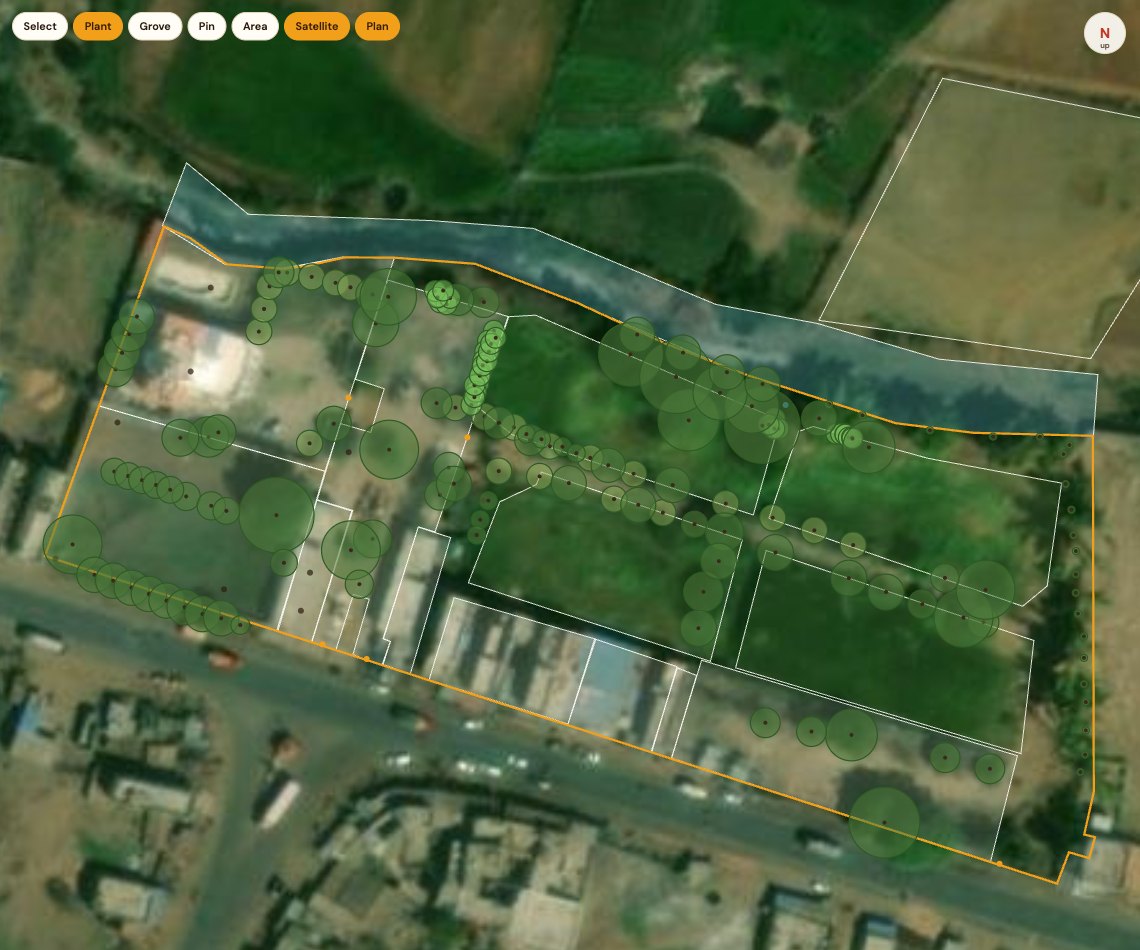
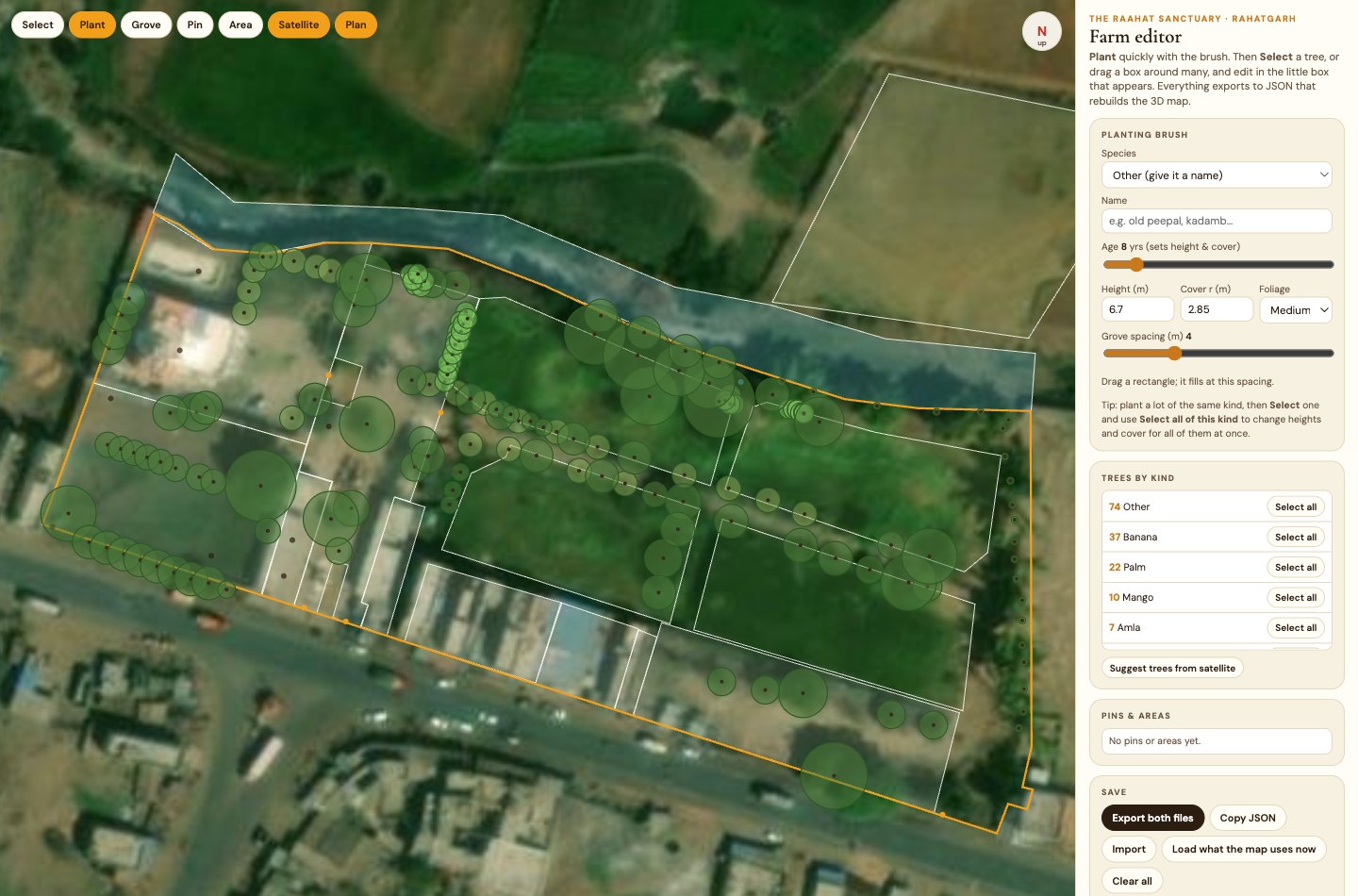
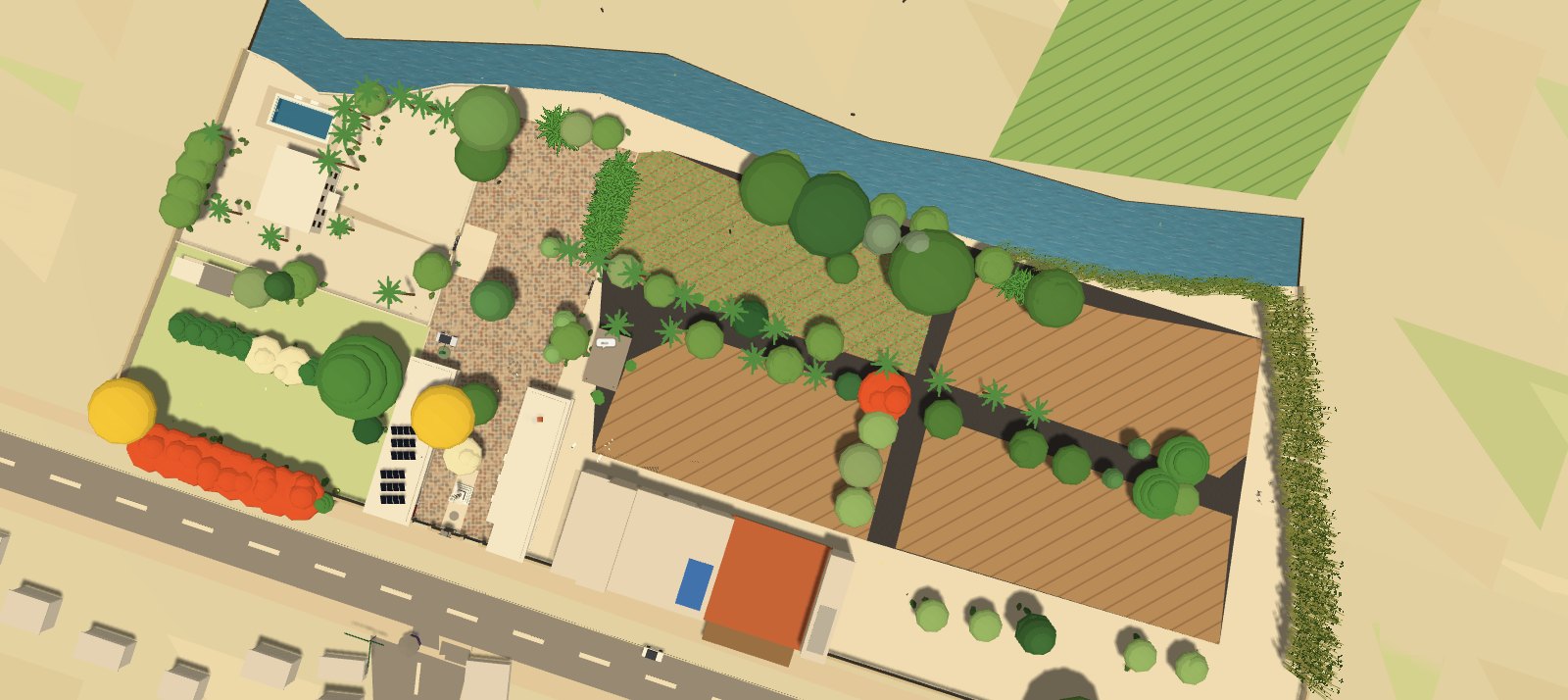
A 3D map is only worth trusting if it matches the land, and the owners know that land tree by tree. So we built them a farm editor on the satellite plan, where they plant digital trees that match the real ones on the ground. They can plant one at a time or lay out a grove at a set spacing, change every tree of one kind at once, or have the editor suggest trees from the satellite image. Around the farm, the region is modelled too: about fifty kilometres of real terrain from elevation data, with its roads, rivers and villages, and Rahatgarh Fort and Bhalkund Waterfall in their true places.
On the satellite plan, where the real tree stands, with its species and its age, which set its height and spread.
One file holds their whole planting: where each tree stands, what it is, how tall and how wide.
The 3D map is built from that file, so each digital tree stands where the real one does, and flowering kinds such as gulmohar, kadamb and siris bloom in their own months.


The farm editor with their trees on the satellite plan, the same estate standing in the 3D map, and the region around it.
The same estate standing in the 3D map, and the region around it.
Marketing was only just starting. Without a system, every post is a fresh design job and the feed drifts.
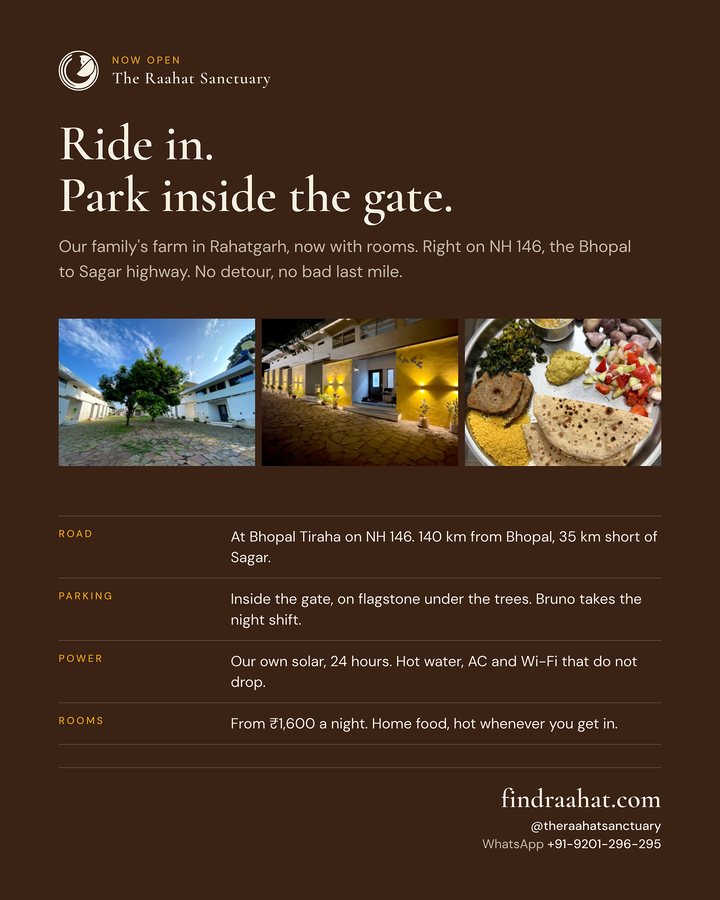
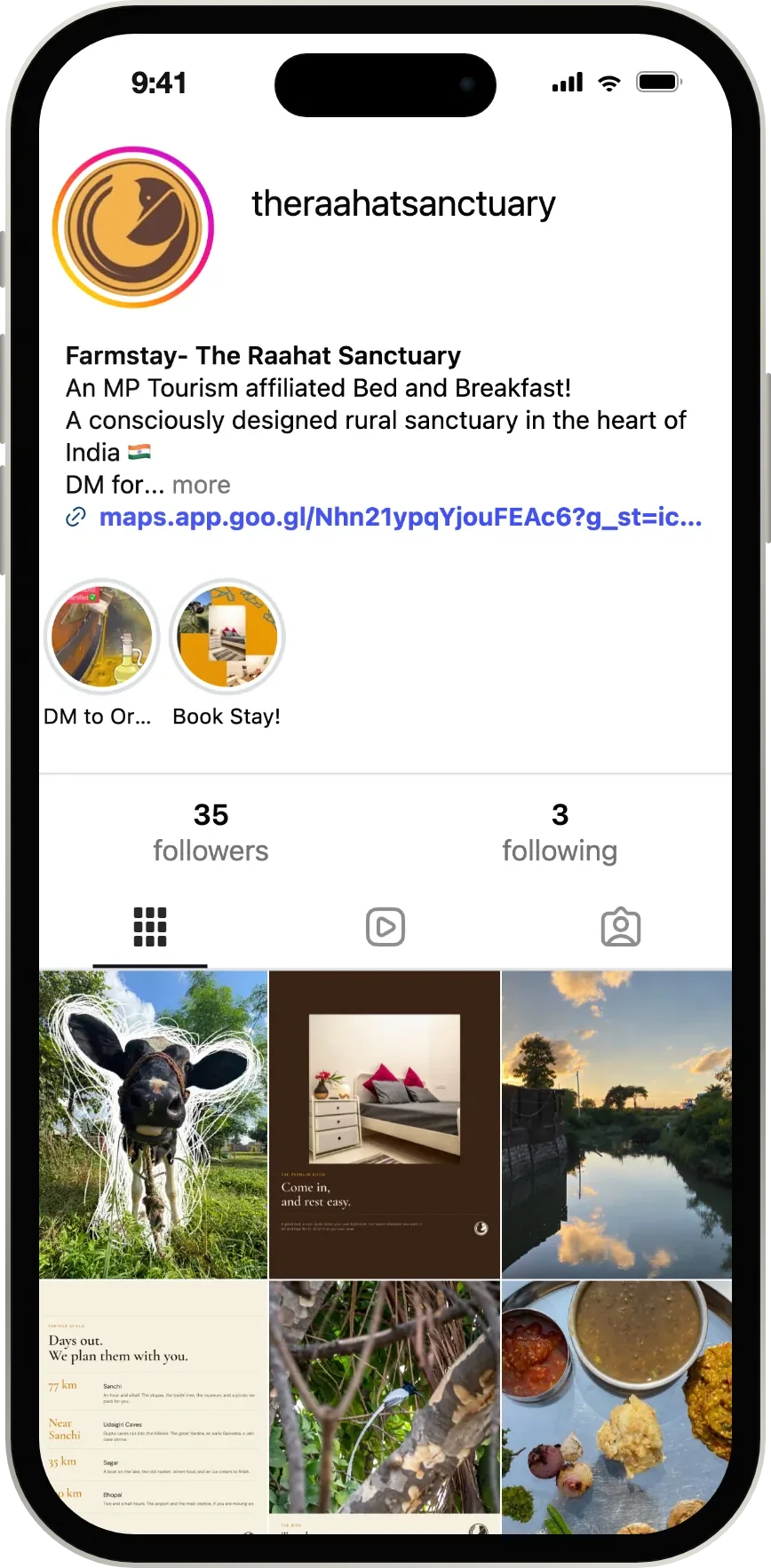
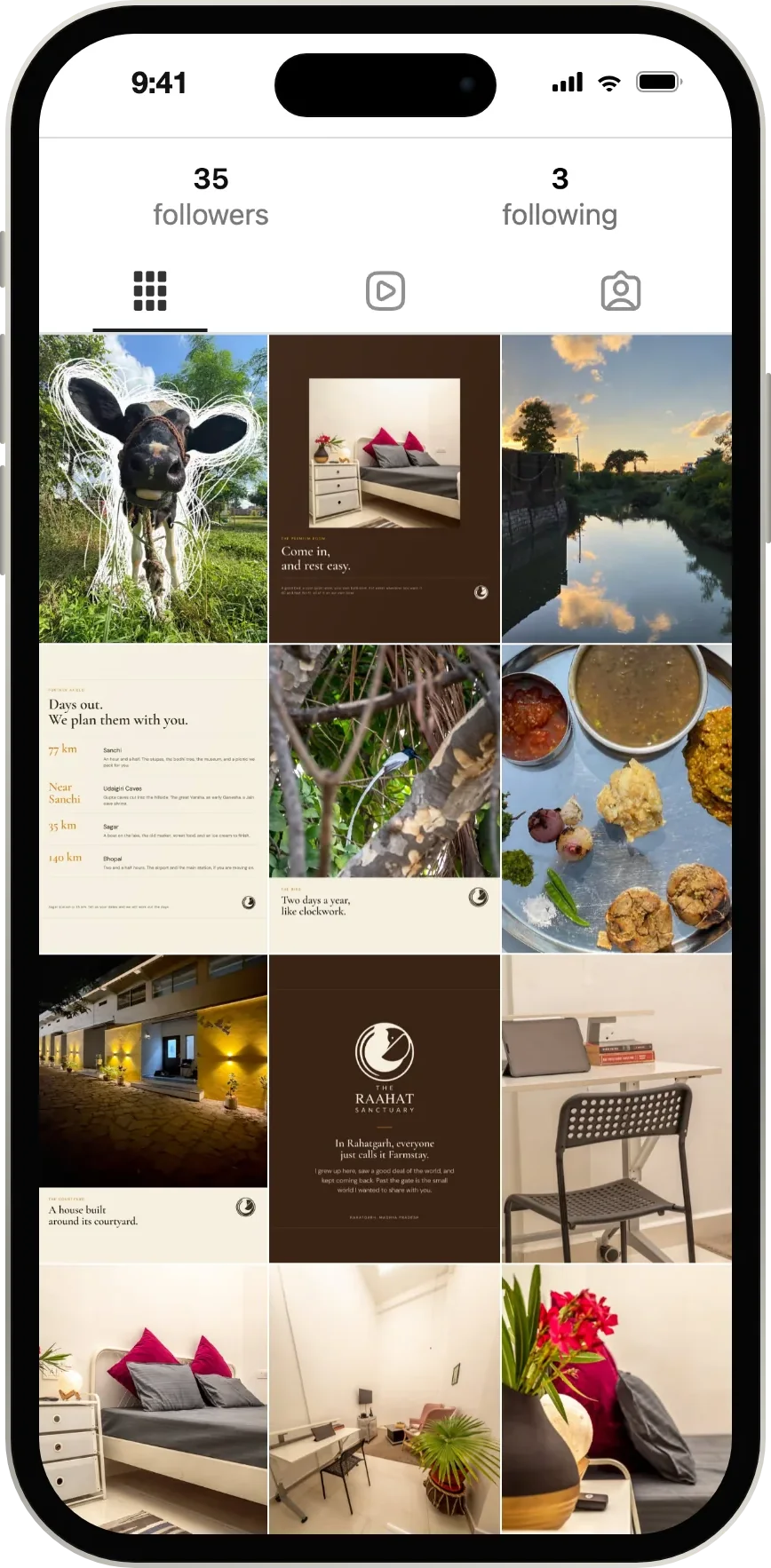
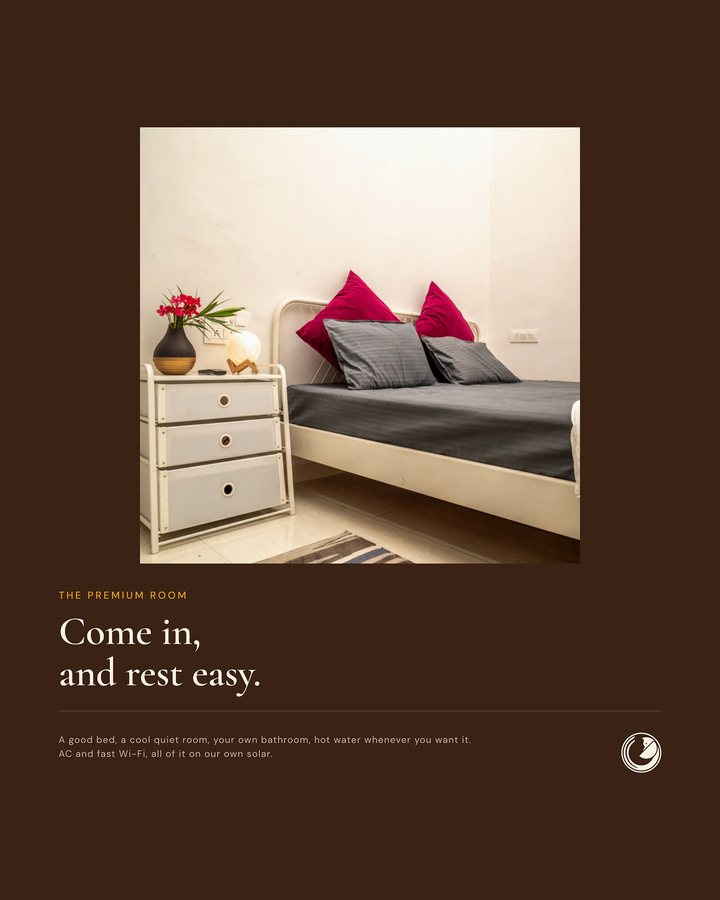
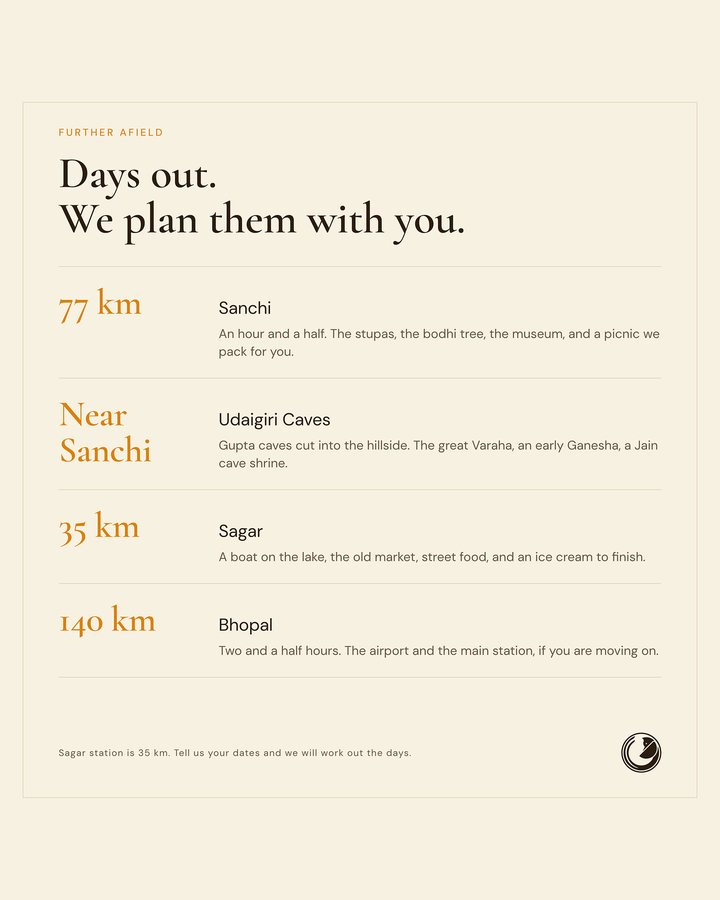
It starts with Instagram: thirteen templates in the website's palette, from a bare photograph to a card of distances or a poster made to be forwarded on WhatsApp. The pictures come from a library of 604 photographs that we catalogued by subject and tag, with a note on where each one fits.
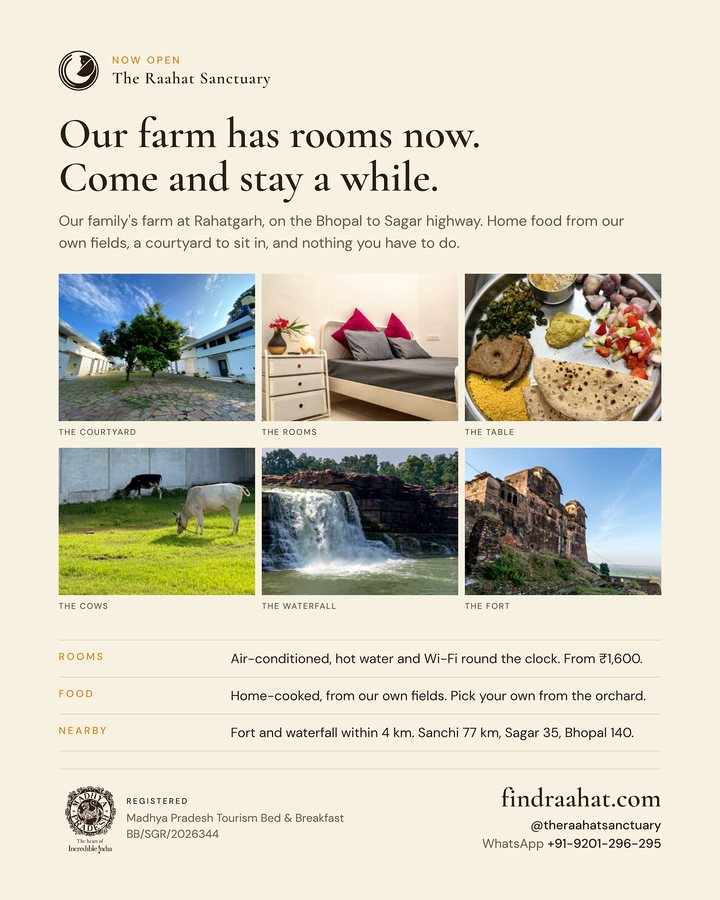
The rules are checked by the software that makes each post, so the feed stays consistent whoever prepares the next one. Instagram is step one of the marketing drive.


What keeps the feed right
The first nine make one finished three-by-three, and no two designed cards ever sit side by side in posting order.
Every post with words on it carries the bird mark at one size, with a fixed clear space, except the identity post, which is the logo itself. The software will not make a post that crowds the mark.
Every word on and under a post must pass a check first. It catches a line that sounds like an order, a price on a feed post, brochure words and a wrong distance.
No post goes out until the owners have read it in its checked, final form and signed it off.
Built with three.js, OpenStreetMap, Python, Flask, SQLite, MQTT and WhatsApp. The website is hosted on Cloudflare.
If your place is worth the trip but hard to find, or hard to run, we would like to hear about it.